Winning both chambers of Congress brings a familiar temptation to treat every unfinished deal as one you can rewrite on better terms in January. Democrats should resist this temptation with permitting reform. They still need a Republican president’s signature, and the bipartisan deal on the table delivers the agenda they just won on: lower the bills.
Right now, the cheapest, cleanest electricity in America can’t reach its customers. A whopping 86% of the power projects stuck waiting to connect are zero-carbon generation or storage. We’re not allowing these efficient, affordable power sources to compete.
That should alarm anyone who pays an electric bill, and anyone who cares about emissions. Zero-carbon energy was never going to scale as long as cheaper options were available. Competing in the market on a level playing field and winning on cost was always the prerequisite. Climate hawks have waited decades for that day. In much of the country, it’s here.
Now victory is slipping away. The very tools environmental activists have used for decades to slow energy development have become one of the biggest barriers to clean energy. Never-ending permitting reviews and unconstrained litigation make it harder every year to get clean energy projects built.
Today’s Senate cloture vote could be the next major milestone toward a deal that would rewrite how America builds energy infrastructure. The Bipartisan American Affordability and Jobs Act (BAAJA) would remove barriers to competition, making it easier for every energy source to reach customers so the lowest-cost sources can win. That is the market working as it should. For anyone who cares about energy affordability or climate, it is exactly the race we want to run.
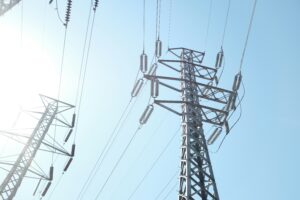
The status quo hurts households first. The grid works like a highway system: new power plants wait years for an on-ramp, and too few lanes connect regions, so cheaper power gets stuck in traffic while families pay more. In 2024, the U.S. completed just 888 miles of new high-voltage lines—well below the roughly 5,000 miles experts say we need each year. BAAJA takes on two of the biggest bottlenecks: the interconnection queue and the shortage of lines between regions. Greenline Insights estimates those reforms could cut residential electricity bills by $19 billion through 2040.
It also hurts competitiveness. In steel, aluminum, and chemicals, energy can be up to two-thirds of production costs. For those industries, and for new semiconductor fabs and battery factories, the price of power often decides whether a new plant, and its jobs, lands in the U.S. or abroad.
And for climate, the math is simple: clear unreasonable bottlenecks and emissions fall. C2ES and Greenline Insights found that BAAJA’s reforms would cut power-sector emissions 9% by 2035 across the Mid-Atlantic, Midwest, and Mountain West. Extending those findings nationwide, we estimate BAAJA could cut 2035 power-sector emissions up to 13.5% below projected levels.
Developers invest where there are profits to be made. Increasingly, that means clean energy. This year, developers plan a record 86 GW, 93% of it solar, batteries, and wind. Even as federal tax credits phase down, our modeling projects nearly 300 GW of new wind and solar by 2035, if it can reach the market.
The reason is cost. Lazard’s 2026 analysis finds unsubsidized solar and onshore wind are now the cheapest new sources of electricity. Gas still has the edge where the grid needs power around the clock, but batteries are helping close that gap every year, and BAAJA’s geothermal provisions would speed another source of clean, round-the-clock power.
Getting to market is the hard part. Energy projects wait an average of 61 months to connect to the grid, up from 18 months in 2005.
Demand won’t wait. When the grid can’t deliver, data centers and other large customers build their own power, often with gas turbines. Without the infrastructure to bring emissions-free projects to market, those customers lose the option to choose them.
The loudest climate objection is that faster permitting helps gas too. It does. That is what a level playing field means. With U.S. electricity demand surging, both will grow, but the numbers show which will win more. Keeping everyone stuck in line is not a climate strategy.
Some also worry that this administration won’t implement the law in good faith. That only reinforces the need for durable rules written into statute. Remember the 2025 stop-work orders on offshore wind projects that already had permits? BAAJA makes it harder for any administration to interfere with projects that have earned their permits. That’s how the system should work.
BAAJA isn’t the bill either side would write alone. It was struck by Republicans Shelley Moore Capito and Mike Lee and Democrats Sheldon Whitehouse and Martin Heinrich. It’s hard to find a wider range of views on energy in the Senate, and yet they found common ground on lowering energy costs.
That is exactly what voters just asked for. Their message wasn’t a love letter to either party. It was a demand: make life affordable, or we’ll keep sending new people to Washington until someone does. Waiting for a better political moment has a price, as every year of delay leaves new generation and transmission stuck while demand climbs and bills rise.
For those of us focused on lowering emissions, the choice should be easy. We wanted clean energy to win on cost. It has. What it needs now is a path to market. Permitting reform isn’t a subsidy or a mandate. It is government doing its most basic economic job: building the roads the market runs on. This Congress can deliver lower power bills and lower emissions with one bill, and today’s vote is where that starts. It would be a historic mistake to snatch defeat from the jaws of victory.